WHO considers crooked teeth as one of the most important oral health problems, after tooth decay (caries) and periodontal (gum) disease.
Crooked teeth cause discomfort and pain in a patient’s mouth. In some instances, they could be a small flaw that a person barely considers. In other cases, they might be the initial things that they notice.
What many don’t consider is the fact that crooked teeth could potentially make brushing and flossing less effective.
Food and bacteria tend to get stuck in areas that are easy to miss. Over a period of time, this results in cavities, gum issues, or irregular wear patterns on your teeth. This is precisely when one might start contemplating tooth alignment – not only for a brighter smile but also to help maintain good oral health.
What Are Crooked Teeth?
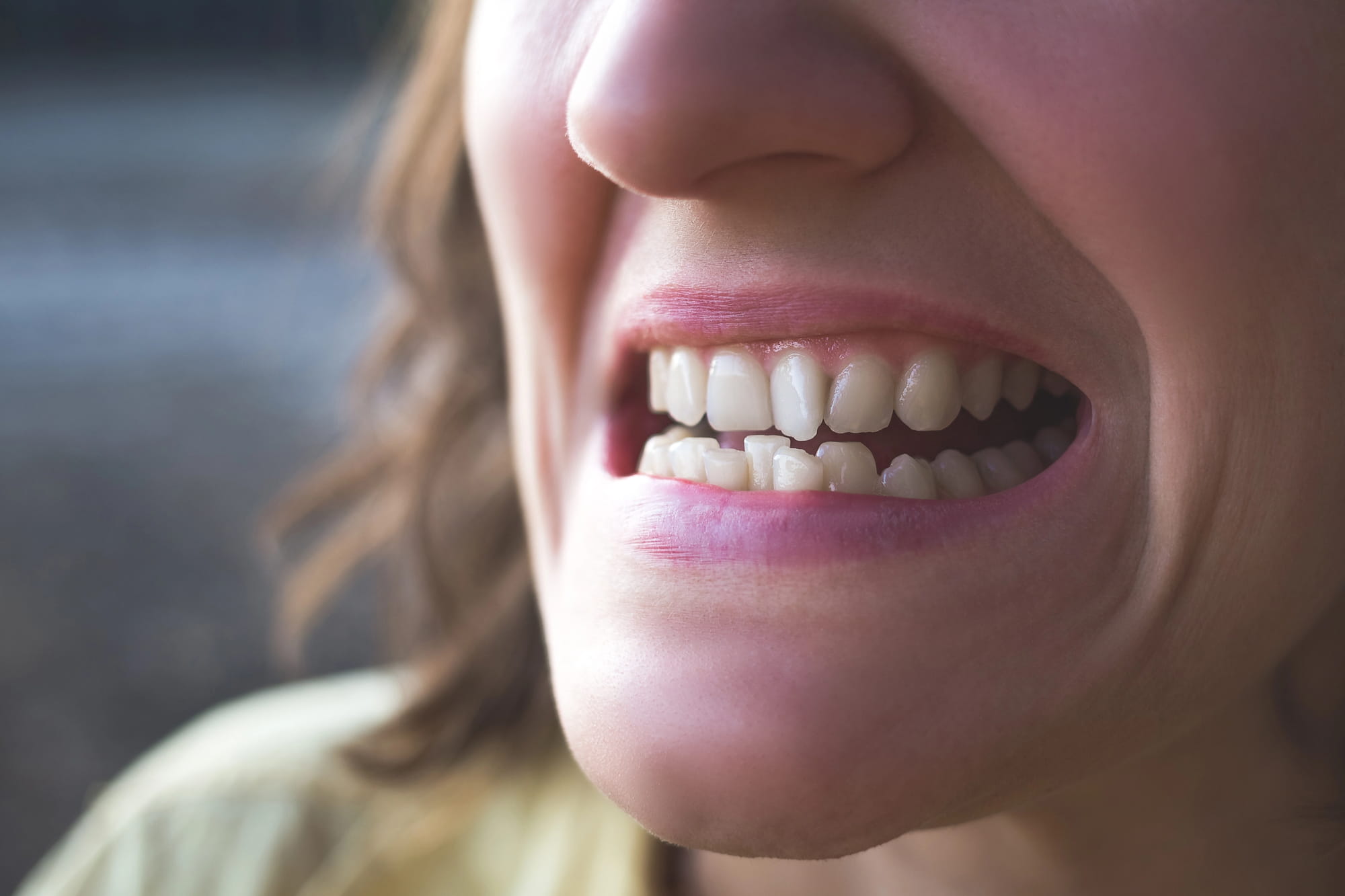
Crooked teeth are teeth that are irregularly positioned within the jaw or dental arch. They may overlap, tilt inward or outward, or appear unevenly spaced. This misalignment can affect a single tooth or multiple teeth and may impact how the upper and lower teeth fit together.
Clinically, crooked teeth are classified as a condition called malocclusion.
Why Do Teeth Become Crooked
The majority of crooked teeth aren’t consequences of your misbehaviours. Most of the time, the causes can be traced back to your childhood days. Some other causes are:
- Inadequate dental development during childhood
- Premature or delayed loss of baby teeth
- Thumb sucking or long-term pacifier use
- Tongue thrusting or poor swallowing habits
- Crowding as a result of insufficient jaw space
- Jaw growth abnormalities
Crooked teeth are super common, and very normal too, whatever the reason behind it.
There are numerous ways to straighten crooked teeth nowadays. The top three options are braces, veneers, and Invisalign. Other methods include dental bonding, crowns, tooth reshaping, and orthognathic surgery. While both braces and Invisalign physically change the structure of the teeth, the same doesn’t stand true for veneers – they only enhance the look. All of them have the same purpose of enhancing your smile – it’s just that they go about it quite differently.
We’ll explore each option individually, starting with veneers.
Dental Veneers: A Rapid Solution for Changing Tooth Appearance
Veneers or dental veneers are thin covers that are usually made of porcelain and placed on the front of teeth. They don’t straighten teeth in the usual way. What they do is alter the appearance of your teeth. Unlike a crown which covers the whole tooth, a veneer only covers the front part.
They are great for use when the teeth are a bit uneven or have little chips, stains, or spaces between them.
How do they work?
Veneers are thin, custom-made shells attached to the front surface of teeth. After a small amount of enamel is taken off, the dentist makes an impression. The veneers are then permanently bonded to change the tooth’s color, shape, and alignment.
They primarily work by permanently covering the front surface of teeth to improve their appearance and to a limited extent, their function. They are designed to correct visible imperfections while preserving as much natural tooth structure as possible.
What Veneers Do
- Cover discoloration, chips, and visible gaps.
- Improve the shape and visible alignment of teeth.
- Resists stains better than natural enamel.
- Provide long-lasting cosmetic enhancement.
- Usually involve less removal of the tooth structure than crowns.
What Veneers Do Not Do
- Do not move teeth or correct bite problems.
- Do not treat overcrowding.
- Do not treat jaw misalignment.
- Provide limited functional improvement.
Financial Cost Range
Per tooth cost typically varies from $800 to $2,500 for porcelain veneers, and $250 to $1,500 for composite veneers in Canada. The complete set varies from $5,400 to $20,000 for porcelain veneers and $1,500 to $12,000 for composite veneers.
Braces: The Traditional Approach to Fixing Crooked Teeth
Braces refer to orthodontic devices that can be used to straighten teeth and fix bite problems by moving the teeth gradually into the correct alignment.
Braces are made of metal or ceramic brackets, and wires, and sometimes elastic parts.
They are fixed on the teeth to correct dental misalignment and bite irregularities. Orthodontists prescribe them as a standard method to deal with crooked teeth, spacing issues, and jaw-related alignment problems.
How do they work?
They are made of brackets fixed on the teeth and joined with wires or bands that exert a controlled force. This force gently moves the teeth to their right places, thereby enhancing the look as well as the oral function.
They are not painful but can lead to some temporary discomfort. This discomfort is common after adjustments and usually subsides after a few days.
Why Braces Matter
They help in:
- Fixing the crooked and misaligned teeth.
- Enhancing the bite alignment.
- Making teeth easier to clean and maintain.
- Reducing the risk of tooth decay and other dental diseases.
- Preventing tooth damage and jaw problems
- Improving overall smile appearance and confidence
In short, braces are very important if you want to have your teeth properly aligned, in good oral health, and a smile that will give you confidence and will be functional.
Financial Cost Range
The cost typically ranges from $3000 to $10,000 and above in Canada. Ceramic braces range between $4,000 and $8,000 and lingual braces are charged between $8,000 to $12,000 or more.
Invisalign – The Most Preferred Solution Today
Invisalign is one of the most popular orthodontic treatments for crooked teeth today, especially among the Millennials and Gen-Z’s seeking a discreet solution.
It is used to straighten teeth and correct bite problems without traditional metal braces. Using a series of removable aligners, it gradually shifts the teeth into their planned positions.
The aligners are custom-made, transparent and fit comfortably over the teeth. Each aligner is worn for a short period and applies a controlled force which gradually moves teeth into the planned position.
It works on the same principle as braces, i.e., controlled force causes bone remodelling.
Invisalign is manufactured from medical-grade thermoplastic material and intended to be worn sequentially throughout the course of treatment. The aligners are removable and nearly invisible when worn, making Invisalign a widely recognized alternative to traditional fixed orthodontic appliances for crooked teeth.
How does it work?
Digital scans are also conducted on the teeth before any sort of treatment is provided. A customized Invisalign treatment plan is formed that shows exactly how each tooth is to be moved.
Each aligner is worn for a period of time and applies a controlled pressure on certain teeth. As the treatment timeline increases, the aligners are replaced with a new set, which then implements the continuous motion of the teeth.
Over time, this process moves the teeth into their desired positions as dictated by the plan of treatment.
During this procedure, observation is made by a dental expert to make sure that the teeth are progressing as they should.
What Invisalign can Treat
It can treat two main dental problems: Dental Alignment Problems and Bite Problems.
- Dental Alignment Problems
- Crooked teeth
- Crowding
- Spacing (gaps)
- Rotated teeth
- Protruding teeth
- Bite Problems (Malocclusion)
- Overbite
- Underbite (mild–moderate)
- Crossbite
- Open bite
- Deep bite
Note: Severe bite issues or jaw misalignments may still require traditional braces or specialist care.
Why Choose Invisalign
Invisalign matters because:
- You can remove them whenever you want.
- It’s more comfortable than braces.
- Works 30% faster than braces.
- It makes oral hygiene easy to maintain, unlike while wearing braces.
- It boosts confidence, since it’s practically invisible!
Invisalign offers a modern and effective approach to orthodontic care by fixing crooked teeth discreetly while maintaining comfort, convenience, and predictable results.
Financial Cost Range
The cost typically ranges from $3000 to $8,000 in Canada. Mild cases range from $3,000 to $4,500 while complex cases can cost from $6,000 to $8,000 and more.
You may explore our Invisalign financial options page for more financing options.
Invisalign is a medical orthodontic treatment for crooked teeth, not just cosmetic. It is FDA-cleared and used worldwide by dentists and orthodontists
Who is not a good candidate?
Veneers are NOT ideal if:
- You have an active gum disease.
- You have overcrowding or bite issues.
- You don’t want to alter your tooth permanently.
Braces may not be ideal if:
- You cannot maintain proper oral hygiene.
- You have concerns regarding how you would look with them.
Invisalign will NOT be ideal if:
- You cannot wear them for a set amount of time per day as mentioned by your dental specialist.
- You cannot maintain proper oral hygiene.
- You will not clean them at the end of day.
Veneers VS Braces VS Invisalign: Key Differences
| Aspect | Veneers | Braces | Invisalign |
| What it is | Custom cosmetic shells. | Fixed brackets & wires. | Clear, removable trays. |
| How it works | Bonded to the tooth surface. | Gradual pressure. | Sequential alignment. |
| Primary Goal | Instant aesthetic fix. | Corrects bite & structure. | Discreet straightening. |
| Treatment Duration | 2-4 weeks | 12-24 months | 6-18 months
(case-dependent) |
| Reversibility | Irreversible | Reversible | Reversible |
| Best Practices | Stains, chips, gaps. | Severe misalignment. | Mild to moderate cases. |
Conclusion
Invisalign, braces, and veneers each address crooked teeth in different ways. Veneers focus on cosmetic improvement, braces correct complex alignment and bite issues, and Invisalign offers a discreet option for mild to moderate misalignment.
The right choice depends on the severity of the issue, oral health needs, lifestyle, and personal goals. A professional dental evaluation is essential to determine the most effective and long-term solution.
In short, there is no single “one-size-fits-all” option among veneers, braces, and Invisalign. The correct choice depends on what problem you are solving, not on preference or appearance.
FAQs
What causes crooked teeth?
Some of the causes for crooked teeth include crowding because of a lack of space in the jaw, thumb sucking or continuing pacifier use, tongue thrusting or poor habits of swallowing, poor development of dental and injuries to milk teeth during childhood.
How do you fix crooked teeth without braces?
Crooked teeth can also be fixed with the help of Invisalign, Veneers, clear retainers, or dental bonding.
Can adults fix crooked teeth?
Yes, adults can fix crooked teeth. Modern dental treatments such as Invisalign, braces, veneers, dental bonding and other cosmetic or orthodontic options allow adults to correct misalignment effectively, regardless of age, provided their teeth and gums are healthy.
Do adults have crooked teeth?
Yes, they do. It is a condition called malocclusion, commonly caused due to genetics, jaw size, tooth loss, injuries to the mouth and childhood habits like thumb sucking or tongue thrusting.
Do crooked teeth need to be fixed?
It’s completely up to you. If you’re comfortable with your teeth the way they are, there’s no need to change them. But it would be advised that you take proper care of them. However, for those who feel insecure about their smile or experience difficulty maintaining proper oral hygiene due to misalignment, treatment can be a beneficial option.
What’s the best way to straighten crooked teeth?
The best way to straighten crooked teeth depends on the severity of the misalignment, oral health, and personal preferences. Common options include Invisalign, traditional braces, and cosmetic treatments such as veneers, each suited to different needs and outcomes.
How much does it cost to fix crooked teeth?
The cost to fix crooked teeth typically ranges from $800 to $10,000 or more. They vary widely depending on treatment type and complexity.
But here in our Dental Clinic, we make it affordable for you. That is, you can pay it off in low monthly installments..
Can veneers fix crooked teeth?
No, they cannot. Veneers only achieve the appearance of straight teeth without physically moving them. For fixing crooked teeth, opting for traditional braces, Invisalign, or dental bonding would be preferred.