Dental crowns restore strength, structure, and appearance to damaged teeth. They function as protective caps. They shield weakened tooth structure from further damage. However, crowns are not considered permanent restorations. Over time, the effects of mechanical stress, bacterial challenge, and normal oral function can compromise the integrity of crowns.
Recognizing early signs of failure allows for timely dental crown replacement. This prevents secondary decay, structural deterioration, and more complex procedures.
What is a Tooth Crown?
A tooth crown is a custom-fabricated restoration. It is placed over a weakened or damaged tooth. Its purpose is to restore shape, size, and function. Dentists commonly recommend crowns after:
- Extensive tooth decay
- Large or failing fillings
- Tooth fractures
- Root canal treatment
- Structural wear
- Cosmetic correction
Crowns may be fabricated from:
- Porcelain
- Ceramic
- Zirconia
- Metal alloys
- Porcelain-fused-to-metal (PFM)
Porcelain and ceramic crowns are commonly used on anterior teeth. This is because of their natural transparency and aesthetic integration. Metal and zirconia crowns are commonly used on posterior teeth. They can withstand greater forces of mastication and are more durable.
After cementation, the crown completely encases the tooth. This provides an even distribution of forces. It also protects the tooth from mechanical irritation and bacterial invasion.
Replacement of Dental Crowns
It becomes necessary when:
- The restoration no longer protects the tooth adequately or,
- The underlying structure becomes compromised.
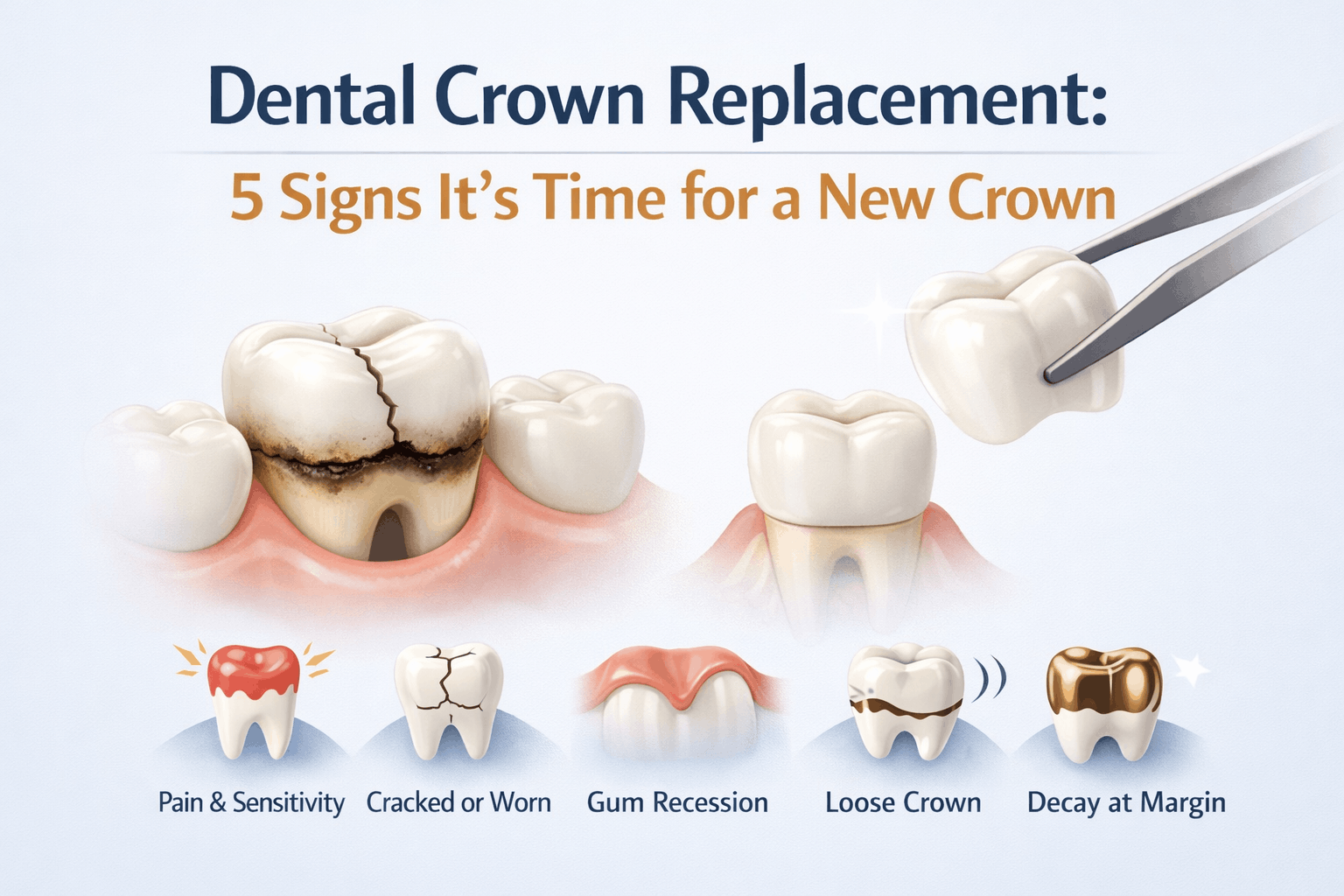
Below are five common signs indicating replacement of dental crowns:
1. Persistent Pain or Sensitivity
A properly fitted crown should not cause discomfort. Pain while chewing or temperature sensitivity may indicate:
- A crack in the crown
- Marginal leakage
- Secondary decay beneath the crown
When bacteria infiltrate corroded margins, the tooth becomes vulnerable to infection. In such cases, dental crown replacement is generally required to restore protection.
2. Visible Cracks, Chips, or Wear
Porcelain and ceramic crowns may chip or fracture due to trauma, bruxism, or long-term wear.
Minor cosmetic repairs are sometimes possible. Structural damage, however, requires full replacement.
3. Gum Recession Around the Crown
When gum tissue recedes, the crown margin becomes exposed. This creates:
- Increased plaque retention
- Higher risk of decay at the gumline
- Visible dark lines near the margin
- Aesthetic irregularities
If the seal between the crown and tooth is compromised, bacteria can penetrate the interface. Dental crown replacement may be necessary to restore proper adaptation and prevent further deterioration.
4. Loose or Dislodged Crown
A crown should remain securely bonded to the tooth. If it feels loose, shifts during chewing, or detaches completely, the cement seal may have failed.
A loose crown allows bacterial infiltration. It can also expose the prepared tooth to mechanical damage. If decay is present beneath the crown, replacement is generally indicated. Simple recementation may not be sufficient in such cases.
5. Decay at the Crown Margin
Crowns do not make the underlying tooth immune to decay. Plaque accumulation at the margins can lead to deterioration of the natural tooth structure.
Clinical signs may include:
- Darkening near the gumline
- Softened tooth structure
- Decay detected on X-rays
The replacement of a dental crown is required to restore protection only when structural compromise is confirmed.
Dental Crown Replacement Process
The dental crown replacement process is systematic. It is generally completed in two clinical appointments.
Initial Evaluation
The dentist assesses the crown, surrounding gum tissue and bite alignment. Diagnostic imaging may also be used. This is done to evaluate the underlying decay.
Removal of the Existing Crown
The old crown is carefully sectioned and removed. This step allows direct inspection of the underlying tooth structure.
Tooth Assessment and Preparation
Decay, if any, is eliminated. Also, buildup material is placed to reinforce weakened tooth structure if necessary.
Digital Scanning & Temporary Crown Placement
An impression or intraoral digital scan is taken to create a precisely fitted new crown. After this step, a temporary crown is placed to protect the tooth while the permanent restoration is being created.
Final Placement
During the second visit, the permanent crown is evaluated for fit, alignment, and bite accuracy. Once confirmed, it is cemented securely.
Timely intervention ensures continued structural protection and functional stability.
How Often Do Dental Crowns Need to Be Replaced
There is no specified timeline for replacing dental crowns. On average, crowns last between 5 and 15 years.
The lifespan of a dental crown primarily depends on:
- Material selection
- Oral hygiene practices
- Presence of bruxism
- Dietary patterns
- Frequency of professional dental care
- Quality of initial placement
Patients who maintain excellent oral hygiene and regular professional care may be able to extend the life of the crown beyond average expectations. On the other hand, patients who grind their teeth or eat hard foods on a regular basis may experience faster wear.
Also, regular dental evaluations allow dentists monitor crown margins, bite integrity, and underlying tooth conditions before significant complications arise.
How Long Will a Crown Last?
The lifespan of a dental crown depends on material characteristics and patient care.
| Crown Type | General Duration |
| Porcelain and Ceramic Crowns | 10-15 years |
| Porcelain-fused-to-metal Crowns | 10-20 years |
| Gold and Metal Alloy Crowns | 20+ years |
| Zirconia Crowns | 15+ years |
However, even the most durable materials are not exempt from mechanical forces and biological processes occurring in the oral environment.
So, to achieve the longest possible dental crown lifespan, patients should:
- Brush teeth twice a day using fluoride toothpaste
- Floss gently around the edges of the crowns
- Avoid biting hard objects (ice, pens, hard candies)
- Use a night guard in cases of grinding
- Attend regular dental check-ups and professional cleaning
With proper care, they far exceed their predicted lifespan. Nevertheless, dental crown replacement is a foreseeable event in long-term restorative dentistry.
When To See A Dentist
If you feel pain, apparent damage, or gum changes around a crowned tooth, it is important to seek professional advice as soon as possible. This will help save the remaining tooth structure. Additionally, it will help prevent more complex procedures such as root canal treatments or extraction.
Conclusion
Dental crowns, though temporary long-term fixes, are effective. Persistent discomfort, structural damage, gum recession, loosening, or marginal decay are clear indicators that dental crown replacement may be necessary. Prompt assessment and appropriate treatment protect the underlying tooth.
If you are experiencing symptoms or have concerns about an existing crown, a comprehensive dental examination will determine the appropriate course of action.
FAQs
How much does a dental crown cost in Canada?
In Canada, a dental crown typically costs $800 to $2,500 per tooth. The price depends on the material used (porcelain, zirconia, metal), clinic location, and whether additional procedures like a buildup or root canal are required.
Are dental crowns covered by the Canadian Dental Care Plan (CDCP)?
Under the Canadian Dental Care Plan (CDCP), crowns may be covered if they are medically necessary. Preauthorization is often required, and coverage depends on income eligibility and clinical criteria. Cosmetic crowns and implant-supported crowns are generally not covered.
Private insurance plans often cover 50–80% of major restorative procedures, subject to annual limits.
Is it painful to get a crown replaced?
Crown replacement is usually not painful. Local anesthesia is used to numb the area. Mild soreness may occur afterward but typically resolves within a few days.
Can a dental crown be repaired instead of replaced?
Minor chips may sometimes be repaired. However, cracked, loose, or decayed crowns usually require full dental crown replacement to restore proper protection.
What happens if you delay replacing a damaged dental crown?
Delaying treatment can lead to decay beneath the crown, tooth fracture, infection, or gum inflammation. Early dental evaluation helps prevent more complex procedures later.