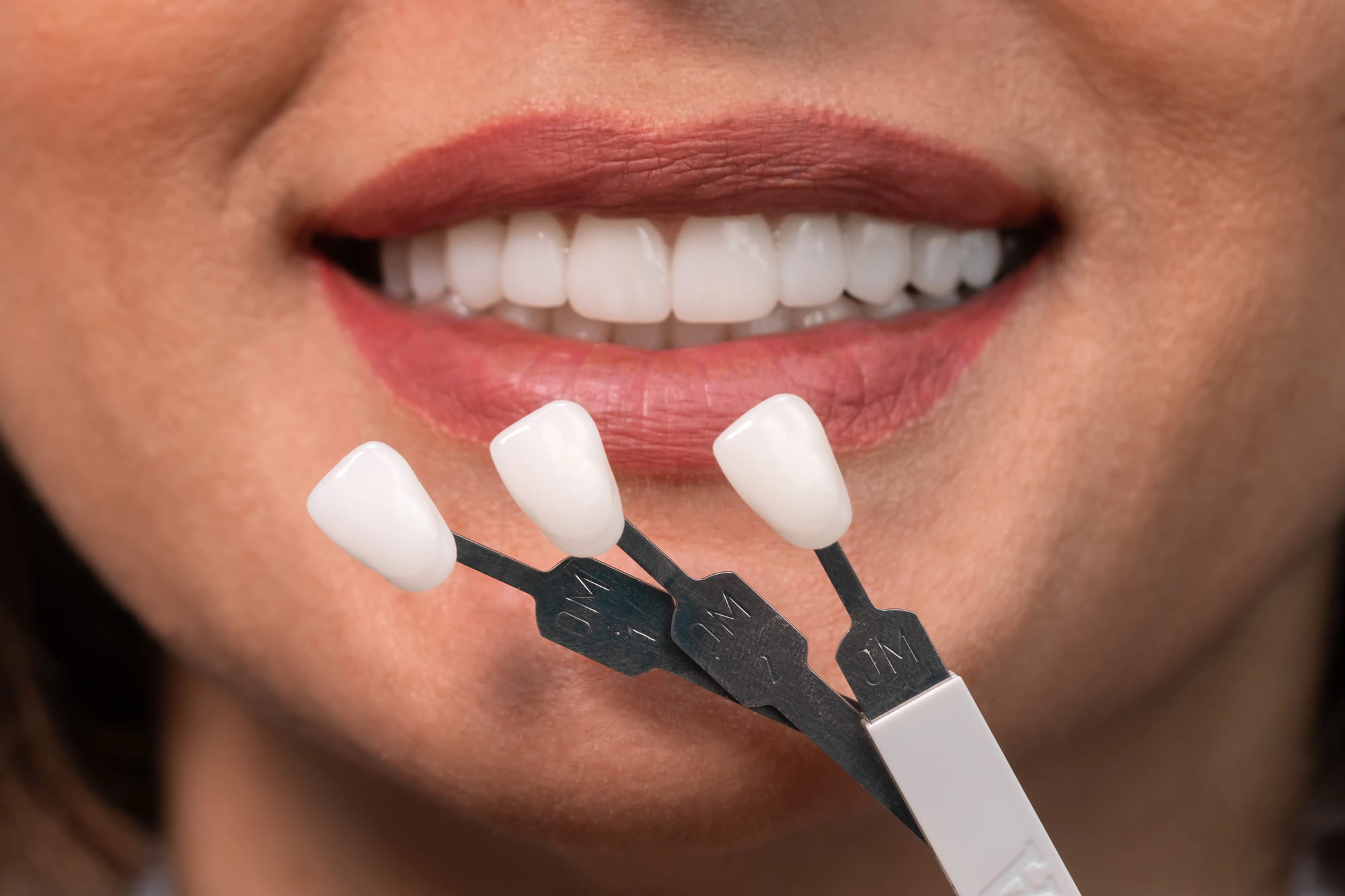
If you’ve ever considered veneers, you’ve probably asked yourself one important question: Do veneers ruin your natural teeth? It’s a completely valid concern. After all, any irreversible dental procedure deserves careful thought.
The good news is that most fears around veneers come from outdated information or poorly done cases, not from how veneers actually work today. When performed correctly, veneers do not ruin your natural teeth. In fact, they are designed to enhance your smile while preserving as much of your natural tooth structure as possible. Our dentist in Etobicoke helps preserve your smile or give you a new smile after listening to your queries and concerns.
What Veneers Actually Do
Dental veneers are artificial coatings that are fixed onto the front of your teeth for beautification purposes. They can be used to rectify dental misalignment, discoloured teeth, and unevenness in tooth structure.
Due to modern developments in dentistry, veneers can be made to have qualities similar to those of enamel. They are commonly recommended for:
- Deep stains that don’t respond to whitening
- Minor chips, cracks, or worn edges
- Small gaps or uneven spacing
- Irregular shapes affecting smile symmetry
A small amount of enamel is taken away to guarantee the perfect fit. Even though this process is irreversible, it does not affect much of the tooth and is highly regulated. For most individuals, this treatment is less aggressive than they thought at first.
Do Veneers Ruin Your Natural Teeth: The Clinical Reality
The main fear when talking about veneers is the loss of enamel. Though it’s correct that enamel cannot regrow, the enamel that is lost during the treatment is little and usually only affects the outer layer.
The inner part of the tooth stays intact. After placing the veneer, it will protect your tooth from any damage. On some occasions, it will even help strengthen a tooth that experiences slight wear and tear.
In the end, success relies on accuracy, such as the preparation of your tooth or applying the veneer, and not the harmful effects of the veneers.
Are Veneers Bad for You?
Another major issue relates to the potential harm that might be done to a person from getting veneers. Clinically, veneers are quite harmless to apply and have been proven useful over the course of years of dentistry practice. Moreover, porcelain material itself is very biocompatible, which means that there will be no negative effects on the gums.
Problems usually occur due to poorly fitting veneers, incorrect bite alignment, and inadequate dental hygiene, which again have nothing to do with the veneers but rather relate to their installation and maintenance.
Do Veneers Damage Your Teeth Over Time?
In essence, veneers do not hurt teeth and are safe for their protection. Well-maintained veneers:
- Do not increase the risk of decay
- Create a sealed margin that protects the tooth
- Can last 10 to 15 years or longer
However, certain habits can shorten their lifespan, such as:
- Teeth grinding or clenching without protection
- Biting hard objects like ice or pens
- Skipping regular dental check-ups
These factors can lead to wear or damage, but they reflect lifestyle and maintenance, not a flaw in the veneers themselves.
Natural White Teeth vs Veneers
The relationship between natural teeth and veneers tends to be incorrectly perceived. Natural teeth will always be the biological standard, but may fail to satisfy aesthetic standards.
| Aspect | Natural Teeth | Veneers |
| Colour | Can be whitened but limited by natural shade | Fully customizable and consistent |
| Shape | May be uneven or worn | Precisely designed for symmetry |
| Stains | Some stains are resistant to whitening | Completely masked |
| Longevity | Subject to natural wear and discoloration | Long-lasting with proper care |
| Aesthetic Control | Limited | High level of predictability |
Natural teeth will forever be the biological standard; however, veneers will always offer a reliable alternative for instances where the biological standard does not suffice in terms of aesthetics.
When Veneers Can Go Wrong
There is a common notion that veneers destroy the health of the teeth involved. Such occurrences are rare and are actually avoidable.
These include over-preparation of the tooth surface, improper bonding, bad occlusal design, and substandard material use. In most cases, the problem is associated with clinical practice and not the procedure itself.
Maintenance and Longevity
Like natural teeth, veneers require consistent care to stay in good condition. Their longevity depends largely on daily habits and regular dental visits.
To maintain veneers effectively:
- Brush and floss regularly
- Attend routine dental check-ups
- Use a night guard if you grind your teeth
- Avoid biting hard objects
Final Verdict
So, do veneers ruin your natural teeth? No. When done correctly, they do not.
Veneers provide a simple and easy way to improve the appearance of your smile without affecting your dental structure. This can only be achieved through proper planning, tooth preparation, and regular care.
If these aspects are met, then your teeth will not be affected by veneers. They will rather safeguard and improve them.
FAQs
1. Can veneers mess up your real teeth?
Veneers do not inherently damage your real teeth when done correctly. The enamel removal involved is minimal and controlled. Issues only arise in cases of poor technique, incorrect bite alignment, or inadequate planning. When properly placed, veneers actually protect the front surface of the tooth rather than harm it.
2. What happens to your real teeth under veneers?
Your natural teeth remain intact and functional beneath veneers. Only the outer enamel layer is slightly reshaped, while the inner structure stays untouched. Once bonded, the veneer acts as a protective layer, and the tooth continues to function normally. However, because enamel is altered, the tooth will always need some form of coverage.
3. Are veneers reversible or permanent?
Veneers are considered permanent because the enamel removal cannot be reversed. While the veneers themselves may need replacement after 10–15 years, the teeth will always require coverage once prepared. Some minimal-prep options exist, but most standard veneers are a long-term commitment.
4. Can veneers lead to gum problems?
Veneers do not directly cause gum problems, but poor placement or hygiene can lead to irritation. If veneers are bulky or not properly fitted, plaque can accumulate near the gumline. When designed correctly and maintained well, they sit naturally and do not negatively affect gum health.
5. Do veneers stain over time?
Porcelain veneers are highly stain-resistant and maintain their colour well over time. However, the edges or bonding material may slightly discolour with age. Composite veneers are more prone to staining. With proper care, veneers can retain their appearance for many years.